What Thermal Velocity and Boost Behavior Mean in Games matters when it changes a real decision: what to buy, what to tune, what to ignore, or what to expect from the next upgrade. A clear explanation should translate the term into setup consequences rather than leaving it at the level of jargon.
The clearest way to judge it is through resolution target, thermals, power, platform fit, and long-term upgrade value. When those factors do not change, the subject may still be interesting, but it is less likely to deserve urgent action.
Value WiFi 7 RouterTri-Band Gaming RouterTP-Link Tri-Band BE11000 Wi-Fi 7 Gaming Router Archer GE650
TP-Link Tri-Band BE11000 Wi-Fi 7 Gaming Router Archer GE650
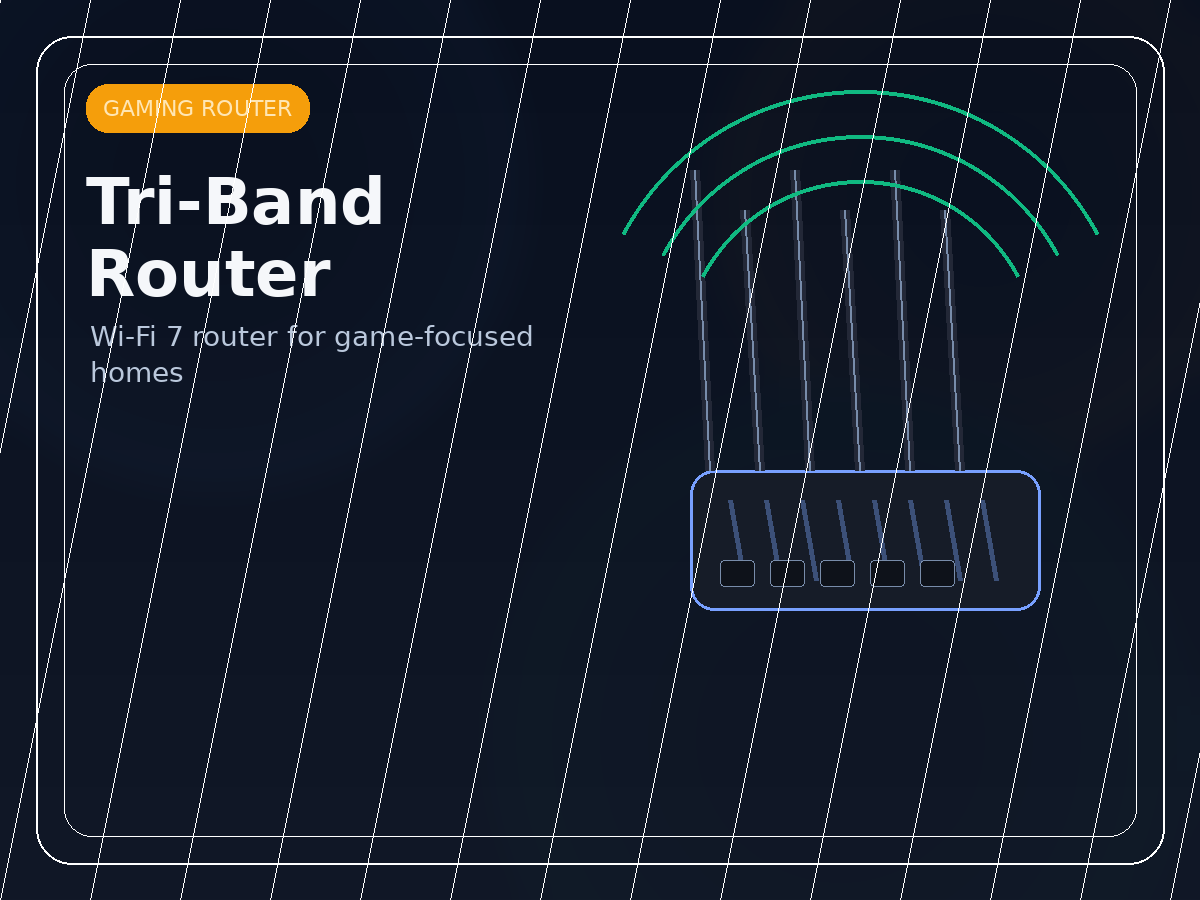
A gaming-router recommendation that fits comparison posts aimed at buyers who want WiFi 7, multi-gig ports, and dedicated gaming features at a lower price than flagship models.
- Tri-band BE11000 WiFi 7
- 320MHz support
- 2 x 5G plus 3 x 2.5G ports
- Dedicated gaming tools
- RGB gaming design
Why it stands out
- More approachable price tier
- Strong gaming-focused networking pitch
- Useful comparison option next to premium routers
Things to know
- Not as extreme as flagship router options
- Software preferences vary by buyer
This becomes easier to judge alongside Gaming Hardware Guide, CPUs Guide, and CPU Tuning and Power Explained, because those pages show where the idea fits inside gaming hardware instead of treating it as an isolated fact.
- A useful explanation removes confusion before it recommends action.
- Not every new term, feature, or metric changes the actual gaming experience.
- The practical question is whether the idea changes performance, feel, cost, or long-term value.
- Related explainers help turn a definition into the next sensible decision.
On this page
Quick answer
In plain English, what Thermal Velocity and Boost Behavior Mean in Games matters when it changes what the player can see, feel, hear, or reliably plan around.
If the concept does not change performance, consistency, compatibility, or buying logic in a measurable way, it should stay informational rather than urgent.
| At a glance | What it means here |
|---|---|
| Page purpose | Explain the subject in clear gaming terms |
| What to watch | Frame-rate delivery, 1% lows, thermals, power draw, compatibility, and upgrade path |
| Biggest risk | Overpaying for isolated benchmark wins, ignoring cooling, mismatching parts, or buying beyond the monitor they actually use |
| Best mindset | Judge the subject by setup impact, not just definitions |
Snapshot
| Page type | Question |
|---|---|
| Primary category | Gaming Hardware |
| Focus lane | CPU Tuning and Power |
| Best for | Readers trying to understand a concept and apply it correctly |
| Main decision | Whether this factor is the real source of the current problem or opportunity |
| Search intent | Informational |
Plain-English definition
What Thermal Velocity and Boost Behavior Mean in Games sits inside Gaming Hardware and more specifically inside CPU Tuning and Power. That matters because the same word can be discussed very differently depending on whether the page is about raw hardware, a platform ecosystem, latency, audio, or a future-facing rendering shift. The meaning becomes clearer once the subject is anchored to the right part of the stack.
The clearest way to judge it is through frame-rate delivery, 1% lows, thermals, power draw, compatibility, and upgrade path. That shifts attention away from isolated claims and toward outcomes a player can actually feel across competitive matches, long sessions, and full upgrade cycles.
The first task is to clear confusion. The second is to show what changes in real use and what does not. That is where practical value shows up.
Why it matters in real systems
What Thermal Velocity and Boost Behavior Mean in Games matters because gamers do not experience hardware and software as isolated facts. They experience a full chain: input arrives, a system reacts, frames are generated, audio and networking must stay stable, and the result either feels clean or it does not. Anything discussed on this page only matters if it changes that lived result.
In gaming hardware, the most important checkpoints are frame-rate delivery, 1% lows, thermals, power draw, compatibility, and upgrade path. That is why the wrong discussion can mislead readers so easily. A spec can be technically correct and still not be the deciding factor for the player sitting in front of the screen. The meaningful question is whether the subject changes smoothness, clarity, comfort, flexibility, cost, or long-term confidence.
This is also why internal context matters. Pages like Gaming Hardware Guide and CPUs Guide help show whether the issue is local, system-wide, temporary, or central to a real buying decision. Strong content clusters do not repeat the same point. They show where a decision gains or loses weight once adjacent topics are visible.
Who should care most
The people who benefit most from understanding What Thermal Velocity and Boost Behavior Mean in Games are not always the people chasing the most expensive setups. In many cases, the biggest gain comes from avoiding a wrong purchase, a mismatched expectation, or a small system weakness that has been hiding behind bigger headlines.
For gaming hardware, this is especially true because balance the part with the monitor, power budget, cooling capacity, and the rest of the build instead of chasing a single spec. That is why the explanation should help several reader types, not just one extreme enthusiast profile.
| Reader type | What changes for them |
|---|---|
| Newer enthusiasts | Get a cleaner mental model and avoid expensive misconceptions. |
| Experienced tweakers | Can place the subject in the full system rather than over-focusing one metric. |
| Upgraders | Can decide whether the topic changes timing or just changes curiosity. |
| Content-driven readers | Can use the page as a bridge into more specific linked guides. |
The practical payoff is clarity. Once readers can see how the subject behaves across these use cases, they stop asking for one universal answer and start asking the better question: which version of the answer fits my setup, budget, game mix, and tolerance for tradeoffs?
How to evaluate it well
Start with the real use case. In gaming hardware, the subject should be judged by frame-rate delivery, 1% lows, thermals, power draw, compatibility, and upgrade path, not by whatever spec is easiest to screenshot.
Then check the surrounding system. A strong component or feature can still produce a weak result when it is paired with the wrong display, form factor, thermal headroom, network path, or workload.
After that, separate felt gains from theoretical gains. Some improvements are visible immediately, while others mainly improve stability, longevity, or flexibility over time.
Finally, judge the tradeoff cost. Every improvement asks for something back, whether that is money, heat, complexity, noise, latency, or opportunity cost elsewhere in the build.
For explainers, the method should leave readers with a stronger decision framework, not just a longer glossary definition.
Common misunderstandings
The most common mistakes around What Thermal Velocity and Boost Behavior Mean in Games usually come from over-isolation. A reader sees one winning number, one dramatic opinion, or one widely repeated myth and then treats it as if it should control the whole decision. That shortcut almost always creates waste.
- Treating What Thermal Velocity and Boost Behavior Mean in Games as if one benchmark or anecdote ends the conversation.
- Ignoring the surrounding system even though gaming hardware lives inside a full chain of tradeoffs.
- Overpaying for isolated benchmark wins, ignoring cooling, mismatching parts, or buying beyond the monitor they actually use.
- Buying or optimizing for a scenario that sounds appealing but does not match the games or habits you actually have.
- Assuming that a technically real difference will automatically become a meaningful difference in play.
The safer approach is to step back and ask what the decision is supposed to improve. If the improvement target is not clear, it becomes easy to spend more, complicate the setup, or chase the wrong optimization entirely.
Best decision path
The strongest path here is the one that keeps what thermal velocity and boost behavior mean in games tied to the larger build, budget, and use case. The goal is not to win a theoretical argument. It is to make the next step clearer.
The best decision path for What Thermal Velocity and Boost Behavior Mean in Games starts with honesty about the real goal. Are you fixing a weak point, choosing between alternatives, building a system, or trying to understand whether a trend deserves attention yet? Once that is clear, the surrounding choice becomes much simpler.
| Your situation | Best path |
|---|---|
| You want clarity | Use the page to define the subject and identify the real checkpoints. |
| You want an upgrade answer | Map the subject against your actual bottleneck or frustration. |
| You want better tuning | Apply the idea only where it changes the system outcome. |
| You want to avoid hype | Wait for practical support and repeatable gains before overcommitting. |
The through-line is the same across gaming hardware: balance the part with the monitor, power budget, cooling capacity, and the rest of the build instead of chasing a single spec. That is the idea that keeps the page practical instead of abstract.
Who should act now and who can wait
This matters most right now when what thermal velocity and boost behavior mean in games is directly tied to a problem the current setup is already showing. If the system feels unstable, inconsistent, harder to use, or less valuable than it should, this page helps test whether the issue really starts here.
It can wait when the setup is already meeting the real target and this factor is only being considered out of curiosity. Understanding it still helps, but the best use of the page in that situation is to sharpen future decisions rather than forcing unnecessary changes today.
Real-world checkpoints
The quickest way to keep this page practical is to test it against the setup in front of you. In gaming hardware, the useful checkpoints are frame-rate headroom, 1% lows, thermals, power draw, compatibility, and upgrade path.
Real setups almost always create more than one checkpoint. A player shopping right now, a player troubleshooting a stuttery system, and a player planning a long upgrade cycle can all read What Thermal Velocity and Boost Behavior Mean in Games and come away with different but still valid takeaways. That is normal. The page becomes more useful once those lanes are separated clearly.
| Scenario | How this page should help |
|---|---|
| You are buying now | Use what thermal velocity and boost behavior mean in games to decide whether the next purchase meaningfully improves frame-rate delivery, 1% lows, thermals, power draw, compatibility, and upgrade path or only adds cost. |
| You are troubleshooting | Use the subject as a diagnostic lens: if the real problem is elsewhere in the chain, acting on what thermal velocity and boost behavior mean in games may not solve it. |
| You are planning long term | Judge whether the topic changes platform life, feature expectations, or the kinds of games and settings your setup can hold comfortably. |
The shared principle across all three cases is restraint. The right move is not always to spend more, switch platforms, or enable another feature. Sometimes the best decision is simply to understand where the subject sits in the stack so you stop chasing the wrong fix.
FAQ
What changes in a real setup because of Thermal Velocity and Boost Behavior Mean in Games?
The most important thing is not the label itself but the setup effect it creates. In gaming hardware, the useful checkpoints are frame-rate delivery, 1% lows, thermals, power draw, compatibility, and upgrade path, because those are the factors that turn theory into a felt result.
When does Thermal Velocity and Boost Behavior Mean in Games matter most for gamers?
It matters most when it changes the way the full system behaves. That might mean stronger consistency, clearer image delivery, better controls, cleaner audio positioning, lower friction, or better long-term value depending on the category.
What mistakes do players make when judging Thermal Velocity and Boost Behavior Mean in Games?
The biggest mistakes come from isolating one claim from the rest of the system, ignoring tradeoffs, and buying or tuning for a fantasy use case rather than a real one.
What should you check before upgrading because of Thermal Velocity and Boost Behavior Mean in Games?
Check your games, display or device, budget, room constraints, surrounding hardware or software, and long-term upgrade plan. Good decisions in cpu tuning and power usually look balanced rather than extreme.
How to judge whether it actually matters
Not every term in cpu tuning and power deserves immediate action. The smarter test is whether it changes image quality, frame behavior, compatibility, comfort, maintenance, or timing in a way that the player can actually verify.
Use thermals, compatibility, power draw, frame-time consistency, and upgrade path as the filter. If the idea changes none of them in a meaningful way, it may be interesting but not yet important.
- Separate the definition from the marketing promise.
- Ask where the term changes the outcome in a real setup.
- Check whether the concept matters today or mostly belongs to future planning.
- Use related pages to connect the idea to the next practical decision.
Bottom line
In the end, what thermal velocity and boost behavior mean in games should be judged by how well it improves the actual gaming experience, not by how dramatic it sounds in isolation.
The point of what thermal velocity and boost behavior mean in games is not just to define the subject. It is to show where the idea becomes a real gaming decision inside gaming hardware.
That is the standard Gamerelo pages should hold: clear enough for orientation, specific enough for action, and connected enough that readers can move from one decision to the next without losing context.
Related Gamerelo reading
These related pages help turn what thermal velocity and boost behavior mean in games from a single answer into a cleaner decision path across the wider Gamerelo hardware and gaming stack.
- Gaming Hardware Guide
- CPUs Guide
- CPU Tuning and Power Explained
- Best CPU Tuning Approach for Quiet Gaming PCs
- How to Test CPU Stability After Gaming Tweaks
- How to Undervolt a Gaming CPU
- PBO vs Manual Tuning for Gaming CPUs
- Does CPU Undervolting Hurt Gaming Performance
Books by Drew Higgins

Prophecy and Its Meaning for Today
New Testament Prophecies and Their Meaning for Today
A focused study of New Testament prophecy and why it still matters for believers now.


Christian Living / Encouragement
God’s Promises in the Bible for Difficult Times
A Scripture-based reminder of God’s promises for believers walking through hardship and uncertainty.