ASUS TUF RTX 5080 16GB OC only becomes easy to judge once you stop treating it like a box-score upgrade and start reading it as part of a complete gaming build. ASUS TUF RTX 5080 16GB OC should be evaluated by asking what problem it solves, which setup it strengthens, and whether it helps the kind of player who cares about competitive feel at 1080p high refresh or broader all-around play at higher resolution.
The listing tied to this piece is built around RTX 5080, 16GB, 16GB GDDR7. Those details matter because the real value of ASUS TUF RTX 5080 16GB OC is not in one marketing bullet. It is in the way the major pieces work together once the machine, game, monitor, and player priorities all meet in the same setup.
Value WiFi 7 RouterTri-Band Gaming RouterTP-Link Tri-Band BE11000 Wi-Fi 7 Gaming Router Archer GE650
TP-Link Tri-Band BE11000 Wi-Fi 7 Gaming Router Archer GE650
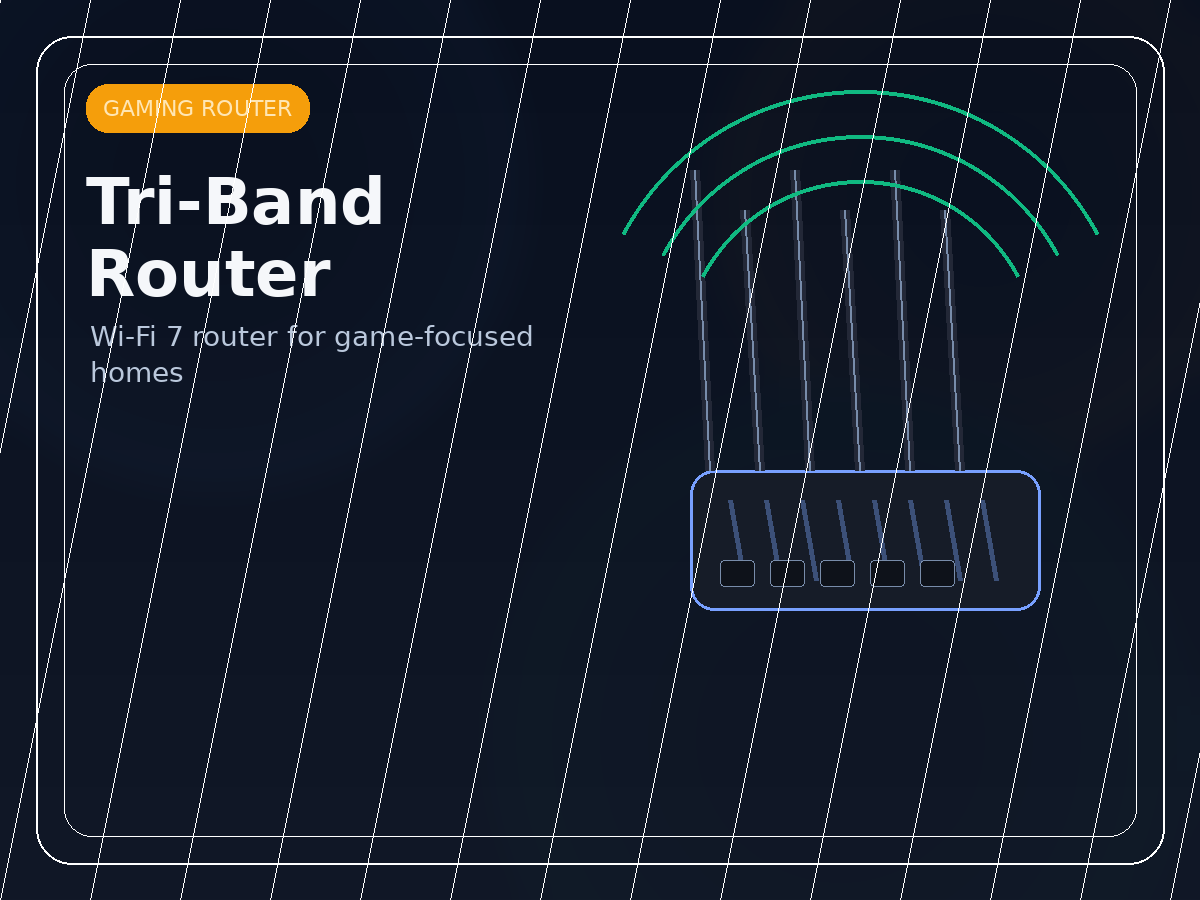
A gaming-router recommendation that fits comparison posts aimed at buyers who want WiFi 7, multi-gig ports, and dedicated gaming features at a lower price than flagship models.
- Tri-band BE11000 WiFi 7
- 320MHz support
- 2 x 5G plus 3 x 2.5G ports
- Dedicated gaming tools
- RGB gaming design
Why it stands out
- More approachable price tier
- Strong gaming-focused networking pitch
- Useful comparison option next to premium routers
Things to know
- Not as extreme as flagship router options
- Software preferences vary by buyer
Gamerelo may earn a commission from qualifying purchases made through this product link. ASUS TUF GeForce RTX 5080 16GB GDDR7 OC Edition Graphics Card
Core hardware role and what the card actually changes
ASUS TUF RTX 5080 16GB OC belongs in the part of a build where image quality, frame rate target, VRAM headroom, cooler behavior, and long-session consistency all meet. A GPU is never just about average FPS. It shapes how confidently you can hold settings, how stable the lows feel when effects stack up, how much room you have for newer games, and how sensible the rest of the build becomes around it.
That is why ASUS TUF RTX 5080 16GB OC has to be read against the whole machine. A card with generous memory or a large cooler can look expensive until you realize it may let a competitive player hold cleaner frame pacing for longer sessions, or let a mixed-use gamer move from 1080p into 1440p without immediately feeling squeezed. On the other hand, a card can also be overbought if the monitor, CPU, or power budget never lets it stretch.
Features and functionality that matter in real use
In practical terms, buyers should care about four things first: the performance class of the GPU itself, the amount of video memory, the cooling solution, and the lane it is meant to occupy inside a build. Cards in this range are not interchangeable. Some are ideal for pure 1080p high-refresh competitive play, some are strongest at 1440p, and some only make financial sense once you move into 4K or heavy visual settings.
VRAM matters because modern texture loads, higher settings, and future game demands punish cards that were bought too close to the edge. Cooling matters because a strong GPU that runs hot and loud can feel worse than a slightly lower tier card with a better board design. Power requirements matter because the graphics card should fit the broader build without forcing every other part decision to become awkward.
Good GPU shopping is therefore less about panic and more about alignment. You want the card whose class, memory, and thermal behavior support the kinds of games you play most, not the card that simply carries the loudest reputation.
How it fits competitive play at 1080p high refresh
At 1080p high refresh, ASUS TUF RTX 5080 16GB OC should be judged less by cinematic benchmark headlines and more by the experience it creates in the games people actually grind. Competitive players care about fast reaction windows, low-feeling input delay, and stable frame delivery under pressure. The better the card class, the easier it becomes to use cleaner settings, stronger anti-aliasing, or higher refresh targets without constantly trading one weakness for another.
That does not mean every strong GPU should be bought for 1080p. Some cards are so powerful that their smartest role is 1440p or 4K, even though they can obviously dominate at lower resolution. The real question is whether you want maximum esports speed, better long-term relevance, or a more premium visual experience. A sensible build chooses one of those on purpose instead of pretending they are all free.
For a dedicated esports player, the card is meaningful when it helps sustain the monitor target while leaving room for cleaner image settings and stronger frame-time consistency. For a mixed-use gamer, the card matters when it makes the jump to a sharper panel possible without turning every new release into a compromise exercise.
Best monitor pairings and refresh-rate logic
The cleanest pairing is a 27-inch 1440p 240Hz monitor. It will also handle a 24.5-inch 1080p 360Hz screen for competitive shooters, and it has enough class to justify 4K 144Hz to 240Hz for single-player-heavy setups.
The monitor is where the GPU finally stops being abstract. A 1080p 240Hz or 360Hz screen exposes raw competitive strength. A 1440p 240Hz display shows whether the card can balance speed and image quality. A 4K panel asks whether the buyer truly wants premium single-player presentation or just likes flagship branding. Pairing the wrong monitor with the wrong card is one of the fastest ways to waste budget.
That is also why sensible gamers decide on the display early. Once the refresh rate and resolution are fixed, the right GPU tier becomes much easier to see and the bad purchases fall away quickly.
Who should buy it, and what kind of buyer should pass
ASUS TUF RTX 5080 16GB OC is a good buy for players whose monitor plan, settings style, and upgrade horizon all line up with its class. It is strongest when the buyer already knows whether the target is 1080p high refresh, 1440p competitive clarity, or 4K showpiece gaming. It becomes a worse buy when someone is really trying to fix a weak CPU, cheap display, cramped case, or power-supply limitation by overspending on the graphics card alone.
The best way to think about it is simple: buy the card that tells the same story as the monitor, the processor, and the games you actually play. That is how ASUS TUF RTX 5080 16GB OC becomes meaningful rather than merely impressive.
For the broader route around this decision, keep reading through How Much VRAM Do You Really Need for PC Gaming Today, The New Rules for Buying a Monitor for Fast Competitive Gaming, and Dream Competitive Gaming PC Build: Chasing FPS, Clarity, and Low Latency.
What a sensible buying decision looks like
The sensible buyer approaches ASUS TUF RTX 5080 16GB OC by fixing the monitor target first, then checking power supply headroom, case space, and the processor already in the build. That order matters because it prevents the common mistake of buying a stronger card than the rest of the system can use well. It also prevents the opposite mistake of underbuying and then trying to force the card through a faster display than it was meant to carry.
That is the practical value of a card like ASUS TUF RTX 5080 16GB OC. It is not just another component in a vacuum. It is the part that either makes the whole build feel correctly matched or exposes every bad decision around it. Good GPU buying is really good system planning.
How it fits the broader setup
Hardware decisions become easier once they are tied to the whole desk instead of judged alone. That means looking at the monitor, the games being played most often, the amount of time spent in ranked competition versus casual or cinematic play, and the buyer’s tolerance for noise, heat, cables, charging, or future upgrading. ASUS TUF RTX 5080 16GB OC makes the most sense when those surrounding details are already honest and clear.
That is also why meaningful gaming recommendations sound calmer than storefront hype. The right purchase is usually the one that removes a real source of friction and strengthens the exact style of play you care about. When read that way, ASUS TUF RTX 5080 16GB OC is much easier to place, and the rest of the setup starts to make more sense too.
Books by Drew Higgins


Leave a Reply