Gaming Technology → Dream Gaming PC Builds Worth Chasing → Dream Competitive Gaming PC Build: Chasing FPS, Clarity, and Low Latency
A real competitive build is not just a powerful build. It is a system organized around frame-time consistency, clarity under motion, disciplined display choices, and low-regret component spending.
Value WiFi 7 RouterTri-Band Gaming RouterTP-Link Tri-Band BE11000 Wi-Fi 7 Gaming Router Archer GE650
TP-Link Tri-Band BE11000 Wi-Fi 7 Gaming Router Archer GE650
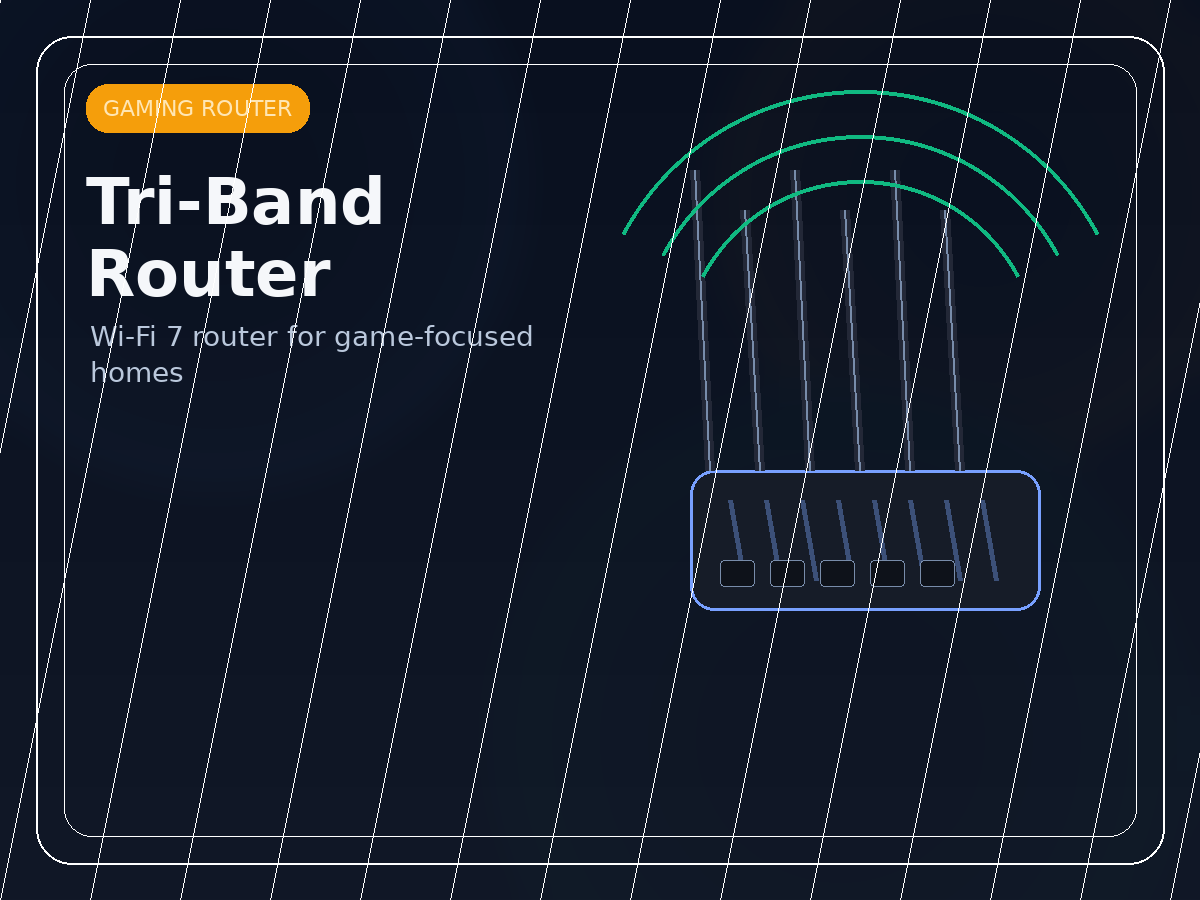
A gaming-router recommendation that fits comparison posts aimed at buyers who want WiFi 7, multi-gig ports, and dedicated gaming features at a lower price than flagship models.
- Tri-band BE11000 WiFi 7
- 320MHz support
- 2 x 5G plus 3 x 2.5G ports
- Dedicated gaming tools
- RGB gaming design
Why it stands out
- More approachable price tier
- Strong gaming-focused networking pitch
- Useful comparison option next to premium routers
Things to know
- Not as extreme as flagship router options
- Software preferences vary by buyer
When done well, this type of machine feels cleaner every minute you use it. It is easy to sabotage a competitive build by spending like a 4K showcase buyer and forgetting what actually helps aim, tracking, and reaction.
Why readers keep returning to this question. This build concept matters because competition rewards balance more than spectacle. The machine has to respect frame stability, latency discipline, monitor pairing, and desk ergonomics together.
Dream-build articles matter because a competitive gaming machine only becomes convincing when the parts list reads like one idea from top to bottom. The point is coherence: one use case, one display logic, one upgrade story, and one ownership experience.
Build direction at a glance
| Build pressure point | What to optimize first |
|---|---|
| Primary user | multiplayer players who want their hardware to support precision, consistency, and visual clarity rather than cinematic excess |
| Main target | 1080p and 1440p high-refresh play with a ruthless bias toward responsiveness |
| What this build should do best | When done well, this type of machine feels cleaner every minute you use it. |
| What can ruin it | It is easy to sabotage a competitive build by spending like a 4K showcase buyer and forgetting what actually helps aim, tracking, and reaction. |
Use this build guide as part of the wider Gamerelo route — where to go next
Use this build concept inside the wider Dream Gaming PC Builds Worth Chasing, then stress-test it against The New Rules for Buying a Monitor for Fast Competitive Gaming and Ryzen 7 9800X3D Reality Check: Why Pure Gaming Buyers Still Gravitate Here so the dream stays coherent from the headline parts down to the daily-use experience.
- Return to Gaming Technology if you want the full map before committing to a build lane.
- Use Dream Gaming PC Builds Worth Chasing for the full set of build archetypes.
- Closest same-lane reads: Dream Nvidia-Centered Gaming PC Build: DLSS, Ray Tracing, and High-End Ambition and Dream 4K Single-Player Gaming PC Build: Ray Tracing Without Regret.
- Core hardware links for this build: Ryzen 7 9800X3D Reality Check: Why Pure Gaming Buyers Still Gravitate Here, RTX 5070 Ti Reality Check: The Premium 1440p Card Most Buyers Actually Want, and The New Rules for Buying a Monitor for Fast Competitive Gaming.
What this competitive build refuses to overspend on
The strongest competitive rigs are ruthless about saying no. They skip prestige parts that do not help tracking, motion clarity, or consistent frametimes, and they redirect that money toward the monitor, cooling discipline, and platform behavior that players actually feel.
- Best fit for players who care more about clarity and consistency than about visual spectacle.
- Weak fit when the build is secretly being asked to double as a cinematic 4K showcase.
- Strong bridge reads: The New Rules for Buying a Monitor for Fast Competitive Gaming and Ryzen 7 9800X3D Reality Check.
The monitor, CPU, and GPU all have to serve the same outcome here: low-latency clarity in actual matches. That is why this build cannot drift into general-purpose prestige spending without losing its identity.
This machine is about clarity under pressure: fast response, clean frame pacing, strong CPU behavior, and a build budget that understands the monitor is part of the performance chain. That is why it naturally routes into Ryzen 7 9800X3D Reality Check: Why Pure Gaming Buyers Still Gravitate Here and RTX 5070 Ti Reality Check: The Premium 1440p Card Most Buyers Actually Want.
What the competitive dream build is really protecting
What Dream Competitive Gaming PC Build is actually optimizing
The easiest way to waste money is to ask a competitive gaming build to moonlight as three other premium PCs. A clear build feels better because it knows what to optimize and what to leave alone.
Parts and systems that fit this build discussion
If you buy through the Amazon product links in this section, Gamerelo may earn a commission.
- AMD Ryzen 7 7800X3D 8-Core, 16-Thread Desktop Processor
- ASRock AMD Radeon RX 7700 XT Challenger 12GB GDDR6 192-bit
- ASUS TUF GeForce RTX 5070 12GB GDDR7 OC Edition Graphics Card
For the bigger system-planning route, pair this article with Gaming Technology, Dream Gaming PC Builds Worth Chasing, and Gaming Computers & Upgrade Paths
Dream Competitive Gaming PC Build works because it chooses a center. It asks what kind of player this machine is for, what kind of display it will feed, how much background load the owner really carries, and how much of the budget should be protected for future upgrades. Once those answers are clear, the whole system becomes easier to shape.
The compromise this build accepts on purpose
This build willingly gives up some cinematic vanity to protect the things competitive players actually feel: frame-time cleanliness, motion clarity, fast display fit, and low-regret latency choices. That is why it should stay closely tied to The New Rules for Buying a Monitor for Fast Competitive Gaming and Ryzen 7 9800X3D Reality Check: Why Pure Gaming Buyers Still Gravitate Here, not drift toward showcase spending.
Where Dream Competitive Gaming PC Build should spend first
In a competitive build, the first dollars should protect frame-time cleanliness and display fit. That usually means starting with Ryzen 7 9800X3D Reality Check: Why Pure Gaming Buyers Still Gravitate Here, a sensible GPU lane, and a monitor choice disciplined by The New Rules for Buying a Monitor for Fast Competitive Gaming.
That is why competitive gaming builds stay connected to component reads like Ryzen 7 9800X3D Reality Check: Why Pure Gaming Buyers Still Gravitate Here , RTX 5080 Reality Check: High-End Speed Without the Flagship Tax , and 32GB vs 64GB for Gaming in 2026: When Memory Capacity Actually Changes the Experience. A competitive gaming machine is strongest when its components still make sense outside the mood board.
A dream build stays honest when it pays premium money only where the competitive gaming route truly earns it. One or two standout pillars plus discipline everywhere else usually beats a parts list that tries to flex in every category.
How to pace spending across Dream Competitive Gaming PC Build
A competitive dream build becomes practical when every spending decision protects responsiveness: the right CPU behavior, a monitor that rewards speed, sane memory, disciplined thermals, and a GPU tier chosen for clarity under motion instead of cinematic bragging rights.
Bad sequencing ruins competitive builds fast. Spend too early on prestige GPU bragging rights and the monitor, cooler noise, network path, or CPU choice ends up carrying compromises you can feel in every match.
Where Dream Competitive Gaming PC Build buyers most often waste money
Most overspending starts when uncertainty gets dressed up as ambition. Buyers choose the louder spec because they fear regret, then discover the whole competitive gaming system still is not as clean as a more balanced plan would have been.
This build keeps looping through Prebuilt vs Custom PC in 2026: Value, Warranty, and Upgrades, Gaming Desktop vs Gaming Laptop: Which Upgrade Path Makes More Sense, and Rising Component Prices Are Reshaping PC Gaming More Than You Think because even a precision-first machine still has to survive real budgets and real ownership.
The heat, noise, and daily-use realities of Dream Competitive Gaming PC Build
A competitive machine can still fail if it is loud, thermally sloppy, or paired with the wrong screen. The dream only holds up when the system stays clean and calm in actual long sessions, not just during a benchmark run.
That is why case usability, airflow path, cooler behavior, PSU quality, and storage layout deserve genuine planning time in a competitive gaming build. The right enclosure often creates more long-term joy than another cosmetic upgrade.
The display and peripheral choices that complete Dream Competitive Gaming PC Build
The tower is only part of a true competitive machine. Mouse feel, monitor motion handling, Ethernet stability, and the overall desk environment matter enough that this build should keep one eye on Gaming Mice, Keyboards, and Controllers: Which Upgrades Actually Change Play and Wi-Fi 7, Ethernet, and Router Choices for Low-Latency PC Gaming.
For that reason, keep The New Rules for Buying a Monitor for Fast Competitive Gaming , Mini-LED, OLED, and IPS Gaming Displays Compared , and USB-C Docks, Capture Cards, and Streaming Gear That Make Sense for Gamers active in the plan whenever a competitive gaming machine is supposed to feel complete.
Who should choose a different route instead of Dream Competitive Gaming PC Build
Every competitive gaming route gets stronger when it admits who should choose another path. A build becomes sharper the moment it stops trying to flatter every possible buyer.
Knowing what to exclude is part of the craft in a competitive gaming build. The best versions are not universal; they are the ones whose tradeoffs stay clean and intentional.
Why Dream Competitive Gaming PC Build still needs an upgrade plan
Even a competitive gaming machine needs room to evolve. Sensible power delivery, usable cooling, balanced memory, and a motherboard tier that does not dead-end the owner all help the build stay worth keeping.
This route should eventually pass through Dream Upgrade-Path Gaming PC Build because a true competitive machine stays honest about ownership. It should be fast today, easy to tune tomorrow, and resistant to the kind of flashy overspend that does nothing for aim or latency.
Questions players ask before committing to Dream Competitive Gaming PC Build
Does Dream Competitive Gaming PC Build always need the most expensive GPU available?
The best dream build does not automatically use the most expensive GPU available. It uses the GPU that keeps the whole competitive gaming machine coherent and believable.
Does Dream Competitive Gaming PC Build need premium RAM and storage to feel complete?
Memory only needs enough quality and enough headroom to serve a competitive gaming build cleanly. That is why 32GB vs 64GB for Gaming in 2026: When Memory Capacity Actually Changes the Experience and PCIe 4.0 vs PCIe 5.0 SSDs for Gaming: What Actually Changes belong in the plan early.
Can a prebuilt still count as Dream Competitive Gaming PC Build?
Yes, a prebuilt can still fit this lane when the parts list is unusually coherent and the airflow is honest. That is why Prebuilt vs Custom PC in 2026: Value, Warranty, and Upgrades still belongs in the route, even for buyers who expect to build.
What makes a dream build last longer emotionally as well as technically?
Clarity matters more here than in any other dream-build lane. The whole point is to support accuracy, responsiveness, and visual discipline, not to impress a spec sheet that does nothing for actual multiplayer performance.
- Best fit for players who care more about clarity and consistency than about visual spectacle.
- Weak fit when the build is secretly being asked to double as a cinematic 4K showcase.
- Strong bridge reads: The New Rules for Buying a Monitor for Fast Competitive Gaming and Ryzen 7 9800X3D Reality Check.
This is also where the internal route matters. The article should not end at Dream Competitive Gaming PC Build. It becomes more useful when it stays connected to the lane page, the closest same-lane comparison, and the build or platform article that turns the choice into a whole-system decision.
The smart version of this build invests in the chain, not just the tower. Pair it with The New Rules for Buying a Monitor for Fast Competitive Gaming and Ryzen 7 9800X3D Reality Check: Why Pure Gaming Buyers Still Gravitate Here, because high-refresh value lives in the whole path from CPU to panel.
What this competitive build refuses to overspend on in a full Gamerelo route
Continue through the library
Compare this build with Dream Nvidia-Centered Gaming PC Build: DLSS, Ray Tracing, and High-End Ambition and Dream 4K Single-Player Gaming PC Build: Ray Tracing Without Regret for nearby system priorities.
Jump to Ryzen 7 9800X3D Reality Check: Why Pure Gaming Buyers Still Gravitate Here or RTX 5070 Ti Reality Check: The Premium 1440p Card Most Buyers Actually Want if you want the component-level reality behind this build strategy.
Return to Dream Gaming PC Builds Worth Chasing when you want to branch from this competitive gaming route into a different dream-build direction.
Key takeaways for this article
- A dream PC should still feel smart on day one, quiet in daily use, and easy to grow later.
- The best premium build is rarely the one with the most extreme part in every slot.
- Use Dream Gaming PC Builds Worth Chasing to stay in the lane, then jump to Dream 4K Single-Player Gaming PC Build: Ray Tracing Without Regret when the budget question changes.
The parts of a dream build players notice most in real use
Dream Competitive Gaming PC Build: Chasing FPS, Clarity, and Low Latency only works as a dream machine if the build still feels coherent after the first excitement wears off. Premium parts matter, but so do thermals, acoustics, display fit, control feel, and how upgradeable the platform remains. The strongest route is to stay inside Dream Gaming PC Builds Worth Chasing while also checking Dream 4K Single-Player Gaming PC Build: Ray Tracing Without Regret so the dream does not float free from real use.
A competitive dream does not need to become a cinematic showcase. Many players get more actual advantage from one strong CPU-GPU pairing plus a sharper display and cleaner networking than from overspending on visual luxuries they barely feel in ranked play. That is why How AI Upscaling Is Extending the Life of Older GPUs and How Much VRAM Do You Really Need for PC Gaming Today still belong in this lane.
Why the route through this build matters as much as the parts list
A competitive build also needs a maintenance story that protects consistency. The machine should still make sense after a future monitor upgrade, a GPU refresh, or a switch in game mix, which is why this lane keeps routing into Dream Upgrade-Path Gaming PC Build: The Smart Machine You Can Grow for Years.
If you want a nearby build path, compare this competitive machine with Dream Small-Form-Factor Gaming PC Build: Big Performance in a Carryable Case for a portability-pressured version of the idea, then widen the lens with Windows 11 for Gaming: What to Change and What to Leave Alone if system tuning is the real next step.
Where to go after this build concept
Concrete Amazon-backed parts for this style of build
This build style now connects cleanly to parts like AMD Ryzen 7 7800X3D 8-Core, 16-Thread Desktop Processor, ASRock AMD Radeon RX 7700 XT Challenger 12GB GDDR6 192-bit, and ASUS TUF GeForce RTX 5070 12GB GDDR7 OC Edition Graphics Card, with fuller internal routes in AMD Ryzen 7 7800X3D: Why This CPU Still Matters Even With Newer Chips Around, ASRock Radeon RX 7700 XT Challenger 12GB: The Clean Midrange 1440p Route, and ASUS TUF RTX 5070 12GB OC: Where New-Gen Nvidia Actually Starts Making Sense.
Books by Drew Higgins

Christian Living / Encouragement
God’s Promises in the Bible for Difficult Times
A Scripture-based reminder of God’s promises for believers walking through hardship and uncertainty.

Prophecy and Its Meaning for Today
New Testament Prophecies and Their Meaning for Today
A focused study of New Testament prophecy and why it still matters for believers now.

Bible Study / Spiritual Warfare
Ephesians 6 Field Guide: Spiritual Warfare and the Full Armor of God
Spiritual warfare is real—but it was never meant to turn your life into panic, obsession, or…

Leave a Reply